 Andy Polaine
I’m often asked about my coaching philosophy and why I coach. Here’s the story of where it all started.
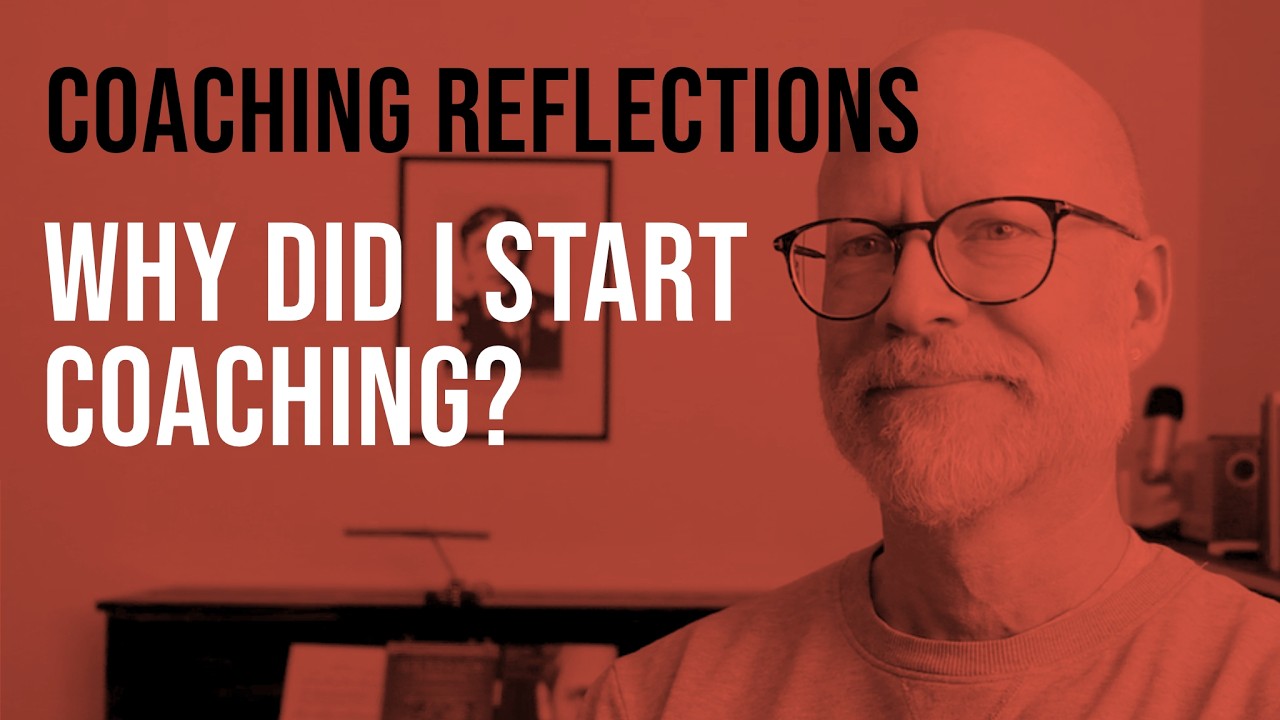
Video loads from YouTube on play — Google's privacy policy applies.
Transcript
Most people who come to me for design leadership coaching think they have a design or a leadership problem. And they don’t usually. It’s usually a people problem.
And so that’s usually involving themselves because the work is really around relationships. The stakeholder management is about your relationship with your leadership. People management is really about your peers and your reports. And because the work is really about understanding relationships, you need to understand how you relate and how you learned to relate.
So although I’m not a therapist, the origin story of my coaching actually comes out of that world. A lot of my work has been around training and teaching as well as being a designer and people know me for service design. And when I left my regional design director role at Fjord, it’s now Accenture Song, I was thinking I was going to do quite a lot of training. That was the thing I thought would be my main bit of freelance work and do some coaching and mentoring and a few other things.
And what I found when I was lining up their training gigs and I was speaking to heads of design and design directors and all those people was I was having kind of long quasi-therapeutical conversations with them and they were saying, you know, well, yeah, I’m really trying to get buy-in and I’m really struggling with this thing. And I was obviously giving them some advice and helping with that. But these were supposed to be sales scores. It was actually my ex-wife who’s a Jungian psychoanalyst who overheard one of those conversations one day.
And then I realised, that was the work.
Now I still do training, but the bulk of my work is now coaching people. And I realised I’d been doing this sort of all my career, whether it was students in tiers in my office, heading a school of digital media or running a masters, or, you know, having similar kinds of conversations in the professional context of designers in teams or designers in tiers, also in my office, having those conversations. And really what I worked out was that people block themselves.
And also that most of the problems that designers have, designers, design teams in general, but also design leadership have, are not really about design. The Design Director role is really a misnomer. You don’t really do that much directing of design. It’s much more about navigating people problems. And for some people, that’s a whole new skill set. And it’s generally something that neither design school nor your early career as an IC will teach you, unless you’re lucky to have a good role model. If you are unlucky to have really bad role models, then you end up doing the ripple effect thing of just repeating the awful habits that you learned from someone else. And then you won’t be a very effective and certainly not very nice design leader.
There are all sorts of tactical advice out there. Some of it’s really good. Some of it isn’t, especially right now with a lot of stuff around AI. But I believe that the psychological journey that one takes to move into or rather step into design leadership is not really spoken about enough. And everyone is just kind of muddling through and scared to ask and say, “Hey, you know, I actually don’t really know what I’m doing here or this is my idea, but that’s just my opinion.”
And so that’s generally what I work with people on. And there’s a whole load more and you can have a look at the other videos and I’ll talk about this some more, but that’s really at the heart of what I’m working with. So if that sounds something like you’re experiencing on something you’d like support with, drop me a note and we can have a quick chat about what your challenges are and how we might work together.