 Andy Polaine
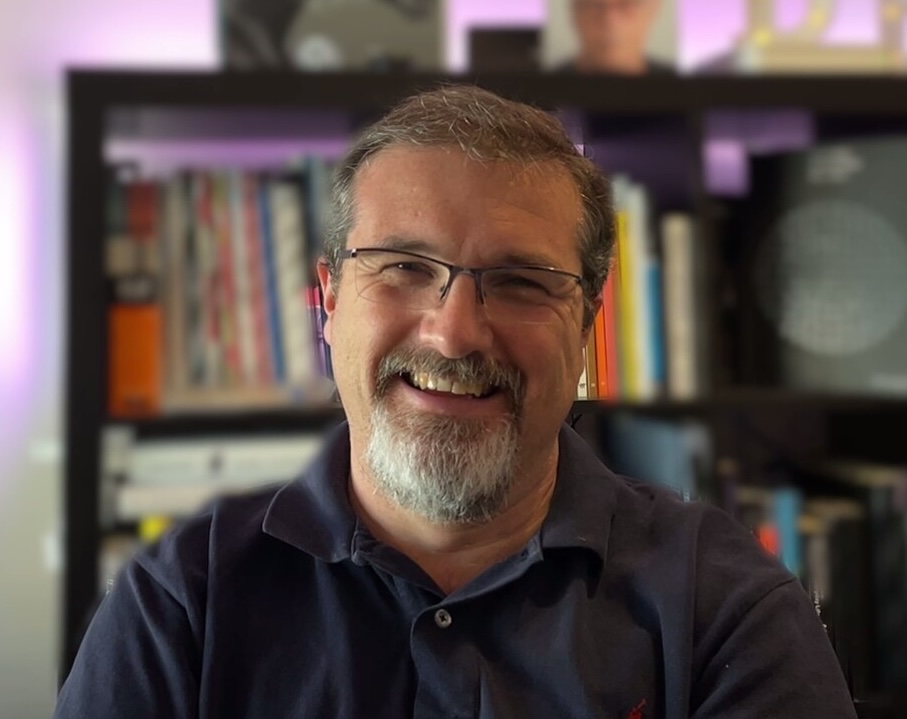
My guest in this episode is Martin Dowson, a design and transformation leader who’s passionate about elevating the role of design as a strategic force for business growth.
With over two decades of experience across Financial Services, Telcos, Media, and more. He’s built and led design teams, established Centres of Excellence, and guided organisations through complex transformations that align design with commercial outcomes.
Martin went from reading our service design book hoping to solve a logistics problem (you couldn’t order lobsters on a Wednesday at Sainsbury’s) to spending six years leading design strategy at Lloyd’s Banking Group.
We talk about what happens when consultants go in-house, why experienced internal voices often get heard less than external ones saying the same thing, and whether AI has the same fundamental scaling problem as the car.
Show Links
- Martin on LinkedIn: https://linkedin.com/in/designled
- Martin’s company: https://liminaldesignoffice.com
- The Being Liminal podcast https://beingliminal.com
Transcript
Note: This transcript is machine-generated and may contain some errors.
Andy Polaine (00:09.934) Hello, welcome to Power of Ten, a show about design operating at many levels of Zoom, from thoughtful detail through to transformation in organization, society and the world. My name is Andy Polaine. I’m a design leadership coach, designer, educator and writer. My guest today is Martin Dowson, a design and transformation leader who’s passionate about elevating the role of design as a strategic force for business growth. With over two decades of experience across financial services, telcos, media and more,
He’s built and led design teams, established centers of excellence and guided organizations through complex transformations that align design with commercial outcomes. Martin, welcome to Power of 10.
Martin Dowson (00:47.852) Thank you very much for having me. Great to be here.
Andy Polaine (00:50.978) So we actually met, you were a client of, when we first met, when I was at Fjord, you were at RBS.
Martin Dowson (00:59.918) That’s right, 2015.
Andy Polaine (01:02.478) And that’s where we first connected and sort of stayed in touch since and we’ve been to part of various design leadership groups and things like that around the place too. Can you tell me a little bit about your journey from whenever it was to here?
Martin Dowson (01:16.418) Yeah, I mean, you met me at my transition into in-house part of my career. I had been at Accenture and left Accenture before the Fjord thing. so I started there five years with a thing called the Interactive Design Group, which was Accenture’s first attempt at a user-centered design practice. And then…
Andy Polaine (01:29.742) Okay
Martin Dowson (01:44.014) around about 2004, they kind of stopped working out how they could sell it because we were too junior to sell, so we couldn’t sell. It was really interesting how it kind of lost its way. Probably a macro environment thing as well. And I went solo and then formed an agency in 2013 and exited that and then went to work at RBS and then to Lloyds Banking Group after that. Funny thing was I had come to
understand that some of the things I was doing was service design because I’d read, uh, your and Lavran’s and Ben’s book. And I was like, Oh, Oh, it has a name. Um, this frustration I have with the interface design doesn’t solve all of the problems. And there are other things in the business that need to change in order for the experience to actually be what customers want or for it to be, you know, a viable business thing. And I noticed that at a really simple level on my first project at Sainsbury’s when, you know, we were trying to work out where and when you have to decide on your delivery slot. And it was the business operations that dictated that rather than anything we wanted to try and do. So we had to solve this interaction design thing because of the way the business operated. And at the end of the day, you still couldn’t order lobsters on a Wednesday. As one does, it’s just the gate to exile.
Andy Polaine (03:04.736) one does.
Andy Polaine (03:09.176) Justice on Wednesday.
Martin Dowson (03:10.464) It’s the go-to example of logistics to some experience problem. But yeah, so I read your book hoping to solve the lobster problem. Yeah. And then when I, I took the job at Royal Bank of Scotland and this fantastic lady, Becky Bush said, well, you know, the first day you should, you should go to the service design training course that we’ve
commission for your to do and Andy’s running it. was like, great, I’ll get to meet Andy. Yeah. So was really like the happiest first day I’d had on a job.
Andy Polaine (03:50.19) I’m glad it wasn’t filled with disappointment in that case.
Martin Dowson (03:52.768) No. So yeah, and then I went to Lloyd’s to join a team that I’d already helped, that had helped Joe, who was running that team, do a redesign of her organization. And there was a seat in the leadership team there for design strategy and design futures. And I took that seat. She said, if you really believe that this
consulting work that you did for us six months ago is worth it, then come and live it. And that was the transition to in-house. And that was quite a ride with Lloyd’s, which was six years.
Andy Polaine (04:33.102) That’s quite an interesting way of getting a job because I think one of the things that, I don’t think I’m being mean to my ex-employer to say this. One of the things that happens with service design though often is, a client will come and they’ve got a certain amount of budget and those things are fixed in organizational budgetary things as well, which are this is my quarter or this is my And they want to achieve a thing.
And it’s either, I’ve got three months worth, or I’ve got a budget to pay you expensive consultants for three months. But actually the work is more like two years. to kind of turn around as a consultant and go, that’s great and we can do some stuff, but actually really, this is more like several million and it’s two years worth of work. because what you’re really saying to that person is you have to collaborate with all those other people in the organization and pool your resources and all the stuff they should be doing, right? Which is cross collaborate and everything.
for this to be a thing. And of course it’s going to scare off a customer, client. then service design consultancy has got, I think, a bad rap for saying, well, here’s your blueprints and some concepts. So I’m interested to know how that was for you to actually then go, I’ll give myself these assets and then I’m now the other side and have to do something with
Martin Dowson (05:48.716) Yeah, the first thing I noticed when I got inside was that my voice was immediately less heard. So the very same people who had had meetings with me and I’d had really deep, deep conversations with, and were at least seeming like they were listening to me as the external consultant. I’m not expecting just somebody to sit there and listen, but you know what I mean? Then I, then I, when I was in in-house, you you’re trying to
pipe up and they go, but you’re just the head of that. And I’m the director of this and you know, okay. So my opinion counts for slightly less now. I was really interesting. And I think there’s a, it’s a real fallacy, right? That, you know, was like, okay, I’ve, there are a lot of really experienced people inside your organization who can see.
what’s not working well about it. And you know that too, but there’s something about the way that the measurements and incentives are aligned internally that in many organizations that doesn’t get listened to. So until somebody from outside comes in and says, but if you just do this for these nine months with this money, then all problems will be solved. good. I get it done in nine months. Great. Most of your people are going, might, you know,
the context here is large legacy organizations, I think the lesson is there for those organizations that are smaller and nimbler because as you scale up, will become these larger, slightly more complicated organizations. And the decisions you make today are going to bed into that a lot.
Andy Polaine (07:34.958) Yeah, it’s one of my favorite questions. We often get asked, particularly as consultants, what do we need to be doing to be more innovative, to be more, I don’t know, it’s usually to go faster. And the question of what do we need to stop doing is never really asked. But I think my favorite question was always, actually, there was a good example of what you said with coming to teach.
Martin Dowson (07:49.454) Yeah,
Andy Polaine (08:02.582) organization service design and all that kind of stuff, which was why is this not happening spontaneously already? Right. And I once had a different bank. didn’t get the job in, but a bank in, in Asia and they wanted, said, could you come and teach all 3000 of our staff design thinking? And I was like, well, yeah, I could have taken quite a long time and it cost you quite lot of money, but let’s imagine I’ve done that. You know, what do you hope will be different?
And, you know, I always knew when a client didn’t actually have the answer to that question, that they were never going to deal with the structural stuff internally.
Martin Dowson (08:40.585) Mm hmm. Yeah. And the thing is they could still do something like that if they understood the answer to that question, because then they would understand that the training experience, whatever that experience is, might be the instigator of change, might be an example of how to think differently, but not the answer to the problem. Right. Yeah. And it’s just, you know,
Knowing that that’s the level at which you’re trying to, if you think that just getting the training in is going to suddenly make a difference. think one of the things that we saw at, I think that we didn’t quite get off the ground. We nearly did with Royal Bank, but not quite. Didn’t see it through. At least I wasn’t there to see it through at the time. getting that level of, we were talking about service design embedded in as many
places as possible. saw it begin when we expanded and opened that course to beyond the design team and beyond the immediate collaborators of the design team. So we started to have people from HR and finance business partners turn up to it and walk away and go, that’s really interesting. So I can think about all my internal departments that I serve as an HR person, as my customers.
And I guess there is a journey that they go on and I start my relationship with them and then we do work together and there’s a journey arc to it. And I could probably sit down and map that out with them and talk about what’s working for them and not working for them. Gosh, this could really change how I engage as an HR business partner. And I was just like, yes, wonderful. Right. you know, but if somebody wants to turn around and say, so as a design department, then what value have you just added?
to the customer experience, I’m like, well, that was the HR business partner for finance. But we have just helped somebody work very differently with the internal stakeholders and think very differently. And that might be a shared collaborative mindset that we could have. We got to Lloyd’s and just cracked on with it and did the same thing again, that foundational course, but didn’t necessarily call it service design.
Martin Dowson (11:02.306) did roll out as design thinking, not IDO MIT, but design led thinking. And I purposely tried to push it as wide as possible off that lesson with RBS. it really worked. We got to like thousands plus people by scaffolding it, by getting trained the trainers and what it did, I think, shift the perception of some stakeholders as to how they could work and the
way in which they could leverage design early thinking. we got to some areas where there was a say-corder who understood they might need to do something like journey mapping. Thinking about open banking as an example, early doors and open banking. And instead of going, right, we’ll get a team and we’ll do blah, blah, myself and Lauren Christoph went in and worked with technical architects and business architects, gave them the skills and let them solve their current problem together with this new
approach. They did journey mapping and blueprinting and it helped them. We gave them just enough to be able to solve their problem with that. That meant that the level of conversation that somebody like Lauren was able to have with that area about what else, what next was much higher than in the weeds because it wasn’t a great use of time to use a really experienced service designer to map that. It was a very fixed problem set. They just needed a slightly different way of working together so they could collaborate better.
Lovely. So we didn’t try to take it all over and by not doing that, our state course engaged more with us. So I think that experience we had with you at RBS had echoes into Lloyd’s as well. Thank you.
Andy Polaine (12:43.854) Amazing, It’s nice to hear. think it’s really nice to hear. I one of the things that, Ben, primarily, I wrote some of it, added to the second edition of the book was the organizational change chapter, which I think you know of. I think you’ve been on the call when we talked about it. And Ben has sort of come to think of service design as a organizational change methodology as much as anything. And with that understanding, it’s kind of.
going back to the thing I said right at the beginning, was often you do a piece of service design work, is sort of part archeology, And partly kind of seeing where all the connections are and where the kind of breaks are and stuff and how then that sort of systems work. But then realizing the organization was unable to receive the outputs of that and do something with it. There’s a couple of stats in the book. I think one of them is from a…
One them is I think from someone like PWC, and one them is from someone else about how many transformation efforts fail. And it’s really high, it’s like 70, 80 % or something of them fail. they’re mostly driven by technology too, which would bring us onto the AI thing in a minute. The technology transformations, and they fail because when they fail to take account of the human aspect of it, the resistance to change or how unpleasant change is.
You know, I always say most people like the idea of change and they usually like the results of it. Nobody likes the middle bit, right? If anyone’s been in a relationship that’s not working and they decide to kind of separate, you know, the idea of it sounds great and then, you know, a year afterwards is great, but the bit in the middle is awful. But say it was a moving house or moving countries or changing jobs, it’s a really unsettling experience.
Martin Dowson (14:31.83) Well, there’s a reason that I’ve chosen to call my business Liminal Design. because you’re talking about a form of a liminal state when you’ve decided to make a change, but you’re not at the change yet. And sometimes actually, I think you have an idea of what you think that future state is going to be like, but you don’t necessarily know it, especially inside organizations. I used to say, most people are at a…
an executive leadership level will tell you that they’re comfortable with change. Something they have to be in order to be a great leader, right? You need to be very good at helping navigate change. I’m very comfortable with change. think mostly because somebody sat down and said, this is going to take us two to three years and these are the things we’re going to do over the next two to three years. And we start with the next three months and then there’s a plan and we move on from there.
So you’re very comfortable change because somebody’s laid out the next two to three years for you. Now I know there’s levels of detail in the first year that aren’t there in the second and third year, but people rarely deviate from that plan. They don’t react to the fact that the world will have changed. And if we’re talking five, 10 years ago, the world would have changed within a year, two years now it’s super fast.
Andy Polaine (15:40.034) Yeah.
Martin Dowson (15:50.638) they don’t react to that in any way. So they’ve got a very fixed view and they say, I’m comfortable because I’ve got this plan, but then they don’t actually deal with the change that happens within that. And that’s, I don’t think people are actually comfortable leading in liminal spaces. we are like, are in polyliminal spaces right now. So there’s a failure in leadership there and it is a very uncomfortable place for humans to be in as well. So I think there’s a, there is a kind of
skilled in navigating that, but it comes in parallel as closely with what you were saying about human, just understanding the humanity of it, because it’s a very uncomfortable place for people.
Andy Polaine (16:32.312) I also think, you know, I’m going to just repeat the thing I’ve said a million times. It’s partly, or not partly, it’s a relic of the industrial thinking too, right? This idea that, A, that change and transformation is a thing that you do and then it’s done. And then you just get on with whatever happens afterwards rather than an ongoing thing. And that’s also this idea of, you know, of a very controllable industrial process, which management is still based upon versus what my favorite metaphor is gardens or landscape gardens.
I love the idea of landscape gardens because people like Capability Brown and Humphrey Repton, they had this mix of ego and humility that I think designers require, which is this idea of like, I’m going to shape this land here to look like it’s natural. That’s the kind of funny thing. And you know, that’s quite some hubris involved in that. I’m going to put a lake there and I’m going to put this copse of trees over there and stuff. And at the same time,
the humility to know that they’ll never see it finished in their lifetime. They have got this idea of a matured garden, which is, know, a hundred years away from where they are now. And, you know, I think the thing about gardens is that they’re never finished. No one ships a garden, right? They’re just these ongoing things. And the environment changes, right? The circumstances change both in and of itself and externally. So you might have freak weather or climate change and things that change everything.
but you also just happen to have a tree that grows really well and it casts shade over a bit and you can’t grow any grass there and all those kinds of things that come internally. my wish is that organizations would see them much more, maybe we should just call them organisms rather than organizations, right? Because it’s much more like that than this kind of factory structure. And it still plagues us that way of thinking, I think.
Martin Dowson (18:23.936) One of the, this is a bit of a design geekery and specifically service design geekery. The Sub Design Network annual conference that was in Amsterdam, which will have been, I can’t remember when, seven or eight years ago. There was a group from China who were over and they had taken the Double Diamond and Design Thinking and
Andy Polaine (18:40.974) Quite a lot of time again.
Martin Dowson (18:53.834) re-articulated it in line with a more Eastern understanding of life. I will just put it this way. So having studied psychology and studied Jung as a part of that, I’m very aware that Jung wrote all his personality types and that work after having spent a lot of time in the East. the thing that he didn’t do when, well, the thing he did when he came across to the, to the West was he actually
changed it so that it was quite boxy and into defined boundaries. But his learning and experience in the East was that things were very seasonal and were in flow and in synchronisation with nature. That synchronisation, that synchronicity is something that he references in his own introduction to the I Ching, which is made up of a number of Oracle cards that are nicely divisible and you can end up with 16.
wonder where he got his 16 from or his divisible by four. This idea that you could be in a different season. In the winter, is a time to consolidate and understand and restructure and build your systems off of the harvest and the goodness that you had. Spring is when you plant for the new and summer is when everything starts to grow. Economies and businesses and individuals, we all have these cycles.
And I think we’re not reactive to those. So I think that the gardening metaphor is, is, really not just a metaphor. It’s actually real. It’s actually how the world works. And I think, you know, people see these things as a metaphor, but I’m like, actually, no, peel it back. It’s real. So what is happening externally right now, then this number of different levels, what stage is your company at? when people talk about being, you know, pre revenue or finding market.
product market fit. These are cycles. So what’s the right thing and the next thing to do? I I’ve struggled, you know, trying to get PE backed firms to do transformation because it’s not the cycle that they’re in. The investment cycle that they’re in from private equity wants to flip and grow in a certain way. So when we understand these cycles, we can actually much better adapt into what we have to offer and do. So I think it’s really important.
Andy Polaine (21:20.238) I gave a talk on almost exactly this actually, web directions a while ago. I was still in Australia, I don’t know, can’t remember when it was. But it was exactly that, about the different seasons of design, I can’t remember what it’s called. But it was, one of the things I was talking about is the need for, at least in Northern Hemisphere, is the need for winter. In winter, you are forced to stop and go in, look internally.
In autumn, we’ve done all the kind pairing back and kind of cleaning up and stuff of the craziness of spring and summer growth in preparing for spring. The next year in winter is this moment of actually just taking stock and being a bit quieter that we don’t really have in our culture of let’s go as fast as possible, keep, know, everything has to be really productive all the time. You know, if you did that in a garden.
You would exhaust the nutrients in the garden. You need that. You need that. I think you see people kind of burning out and sort of pandemic, if you like, burnout is part of that. It’s obviously part of the mantra of AI or part of its cell at least is, well, now you can kind of do everything much faster and be much more efficient. And it strikes me that a lot of the time
I see people going, well now we can just do more of the same but faster. And that seems to be a massively lost opportunity. Because there’s two different things. One is if you make that time up somewhere, then all the classic stuff of, we don’t have time to do research, don’t have time to kind of think about this, don’t have the time to do another iteration, it should go away, right? Because you should now have that time. But I also think, it also just, people deserve to have a little bit of a…
a slower pace sometimes too, because without that cadence, think you, well you do burn out, but I also don’t think the work is very good. What has been, and I kind of fear that the…
Andy Polaine (23:20.418) that structural stuff that you talking about before, feeling is that AI just seems to magnify that, right, rather than somehow solve.
Martin Dowson (23:29.816) that’s what’s happening. It’s accelerating and magnifying that at a time that we’re, I don’t think, for it. I think we could quite easily be ready for it, but there are poly-crises going on. You have to recognize the amount of other types of change that are going on in the world right now. Everything is interlinked. The fact that most
Most companies, with the exception of family-owned businesses of any scale, you’re Wipro, the consulting firm, 70 % owned by a foundation, 30 % on the stock market. Santander is obviously run by a very large family. But right, other way down to small businesses, those
Family owned businesses may have slightly different pressures from a market, but anybody that has investors, whether VC private equity or the stock market, is going to be subject to the pressures of what the investors want in terms of their return from their money. That’s going to be subject to what’s going on in the economy, which is going to be subject to wars and climate and politics. so all of those things, I think, are putting a huge amount of pressure on. Didn’t it feel like at some point in time we were going,
So AI is moving fast, but some of the players are trying to be responsible and they want to get it out there quickly so that we can test and learn. you know, they want to talk about ethics and then some of those things go away because of politics. And then they kind of come back a bit, but now we’ve got economic pressures. So people were saying, actually if AI is going to help us, then they want it to help us now because I’ve got cost pressure because I’ve got to respond to the market.
And those are the things that are going on. think we’re fully capable of using this technology now in the way that you were hinting at, which is we can use the efficiencies it can give us to do things differently. I think we’re fully capable of that. And I think most humans want to do that. why I say most humans is because whether you are a graduate or whether you are a CEO, you are a human.
Martin Dowson (25:53.29) And what’s interesting is how you end up behaving when you’re in your corporate role.
Andy Polaine (25:57.934) Oh God, that’s a whole other character. I guess I really saw it as a sort of management consulting world. I find it fascinating that it’s so ubiquitous that people don’t realize that when you put on a suit and a tie or whatever, you put on a suit and you go into that view, you’re playing a role.
Martin Dowson (26:00.75) And as I know, it’s a whole nother kind of world.
Andy Polaine (26:23.15) that it is a costume and with that there’s a shift in identity and I’ve seen people in business environments and my classic, my most hated phrase is, know, it’s not personal, it’s just business. I’ve seen people in business environments treat other people awfully, in ways they would never treat someone in their daily life, otherwise outside of business. you know, I think if you’ve ever been to a fancy dress party and dressed up or something, it gives you license to behave in a different way.
And psychologically you act in a different way. that’s absolutely what’s going on in those things. And somehow, my sort of coaching mantra is really about trying to bring the humanity back into the workspace and realize that you don’t just check your psychological baggage and your personality at the door, particularly in the days of remote working and everything. Because all of that stuff is there. you have to look at world, global leadership at the moment to see
that the issues and complexes people have end up affecting everyone else enormously.
Martin Dowson (27:27.726) Yeah, I’m having very few conversations with people in which I’m hearing anybody at a leadership level genuinely say, we’re going to do things better through the efficiency. And they are, they are saying, yes, I want to see that now, but then next year we’ll be able to make some cuts. Yeah. And, and so there is this, this compression and it’s a really short term thing. I’m not.
I’m not saying that we can somehow magically reverse that trend, but I do think that there are risks associated with it in loss of knowledge, experience, judgment, and there are systemic risks that they’re going to build up over time. I find there’s something really just kind of logically or rationally wrong with taking everything to its extreme.
when people are sending out their newsletters and saying, Hey, this, company, you know, has now got technology on the board. I’ll just say technology, whether it’s a robot AI, whatever, an algorithm or on the board or next year we’ll see the first company with no employees. And this is good. Why? Who is this good for? and, and so why are we lauding that if that’s now I’m also not trying to be the nothing must change.
Every single person that has their job today must keep their job today. You know, absolutely not. We must look at how we’re going to reimagine things, we also have to understand that kind of the, see the, I totally forgotten the cultural pace layers. That’s it. Brand. Yeah. Steering brand, the cultural pace layers. Something’s changed super fast, but there are some things that change quite slowly. And so.
There’s a part of me that believes that this multi-system crisis that we’re going through right now is going to resolve itself one way or another. And there are only two or three ways it can resolve. And one of them is by systems collapse. So something collapses and it forces, there’s a forcing mechanism. One of the ways is that we get into a world of intensification and, and frankly, quite frankly, a world of pain.
Martin Dowson (29:50.798) And the other is that some of the things that are going on that our crisis do resolve themselves, which allows us some breathing space. And what happens is things actually slow down a bit, but the direction doesn’t change. We’ll still go in this direction, but it will slow down a bit. I’ve no idea if anybody could tell you which one of those things that’s going to be, they’d be lying.
Andy Polaine (30:10.35) There, I mean, there is a, this thing I’ve talked about this before, so I want to belabor it now, but that velocity is an unspoken, unquestioned rather, sort of mantra or good thing in business. And I don’t think it always is. mean, I really don’t think it is. It’s a copy and paste from startup world and the startup world. obviously if you, mean, you talked about the investor thing, if you are going to run out of money,
then obviously it makes sense to move pretty fast to establish a beachhead in the market and all of that stuff. But for established businesses, of which there are many, the idea of going faster and doing it wrong and the damage of that, I look at that thing from Grammarly recently, why wouldn’t you have spent a couple of weeks, even a couple of months longer to kind of work out whether this is the right thing to be doing or not?
versus risking massive damage. I think you see, you know, much as the auto industry has been sleeping certainly in Germany around EVs, don’t often, and occasionally it happens, but generally don’t get, don’t know, Mercedes going, yeah, well, we should put this thing out. I wasn’t really ready, but, lots of people died, but you know, we kind of move fast and break things. There are regulations in place for some of those things. Same with things like, know, physical engineering and…
you know, architecture and those things where, you know, terrible things happen if you do not spend the time getting it right. I think we got so used to this idea of someone rushing through things in digital that it just doesn’t get questioned. And it’s bled everywhere else as well. I think it’s really problematic. And you you’re seeing it with AI and I think the thing that you’re talking about and the knowledge thing, there’s a kind of paradox at the heart of AI’s
being implemented in that way. So now we can get rid of a whole bunch of people and just kind of replace them, which is AI is both a, what a stealer of, but it kind of vacuums up for knowledge. And at the same time, it’s a destroyer of it at the other end. When it gets implemented in an organization, the institutional knowledge goes away in various ways. Other people get fired.
Andy Polaine (32:24.906) and you get what I’ve called sort of organizational amnesia, where it’s kind of like an Alzheimer’s, like literally the sort of neural pathways of the organization die off. Stuff doesn’t get rebuilt, either knowledge doesn’t get rebuilt. And if it does, then it’s in a form that nobody understands anyway, No one can interrogate. I think it’s really, really problematic. And I suspect there’s a kind of institutional knowledge debt that is starting to get racked up already and, well, come home to roost.
Martin Dowson (32:54.226) concerned about it because on the one hand I see the personal productivity for sure but then on the other hand the lack of using that time to reinvest in juniors and mids I’m very concerned about the experience going the experience levels going away. So I recently did this talk at UXCrunch called Designs Full Circle and one of the
there’s always some kind of Easter egg in my visuals. don’t really do a lot of visuals words up on the screen. try and focus mostly on what’s being said. But I left this Easter egg in the UX Crunch talk. It’s this, because the talk was called Designs Full Circle. I used the Enzo circle, which is this paint brushing, painting technique. And you have this brush that does the full circle.
Andy Polaine (33:51.522) Hmm.
Martin Dowson (33:52.174) It’s something that masters at Japanese calligraphy and painting and things do repeated again and again and again. And you can read up and watch videos and documentaries of these people actually just practicing the circle again and again and again. And I love this idea of mastery, this mastery cycle. The ultimate, we know about the 10,000 bars like in order to get to a certain level of mastery over something. There’s another part to the mastery cycle, which is
that when you are then sharing and educating or working with people who do not have the same level of mastery as you, you’re doing two things. They’re passing that knowledge on, absolutely, but you are then seeing your own craft through a totally different lens, which is the lens of somebody else who does not know. And you begin to see levels that you didn’t see before. And this is when your mastery starts to evolve itself as well.
And this is just a fundamental truth about how we learn and adapt and evolve as human beings. And if we want to hold onto that humanity of that and the genius that we do have within ourselves as a, our own capability and potential, we need to keep going through that mastery cycle. So I feel like the productivity that seniors are getting out of AI should be reinvested in, in that kind of, in doing their own Enzo circle, that reinvestment.
progress us and it will progress others as well. But if we don’t, and we use that efficiency to say, now I can just use more and more senior people to get more and more things done, because the things that I shouldn’t spend money on my senior people doing, the AI can do, and nobody will have their 10,000 hours. And I feel like the challenge you mentioned is that some people are saying it’s all right because junior people coming into an industry
will learn using the tools of AI and they will master those tools. So yes, but the knowledge is embedded inside it and it’s not even embedded accurately. And it’s not, it might be embedded, but it’s not embodied. And our learning and our mastery as human beings is embodied learning. And we don’t get that embodiment of learning through that. So I’m in this real tension point or a
Martin Dowson (36:21.826) genuinely sat with leadership teams at my client and said, look, produce this piece of work, which is a quality measurement framework and a presentation to go alongside it. It’s an amalgamation of lots of different pieces of knowledge, but it’s just a draft that has been gen-AI’d. But what it allowed myself and somebody else to do is cut to the point of what we really needed to talk to, because there was this body of work that was detailed, that was done. And we could look at it and go,
Well, that’s not exactly how we do it here or we’d use a different measure for that, but I’ve got the structure and because we’ve got the structure in place, a lot of the detailed hard work has been hard work. guess, noddy work has been done time consuming work. Yeah. And now we just get to the conversation that we really wanted to have brilliant in a room full of people who have experience under their belt, but not much used to, to others. And because I’ve just shortcut all the.
this has been produced because I’ve done this three or four times because I actually know what works and doesn’t work. I know the difference between NPS and CSAT and customer effort scores and when NPS works and doesn’t work and blah, blah, blah, blah, blah, Which, you you build that up from experience. So there’s, it’s really risky.
Andy Polaine (37:38.35) Yeah, no, definitely. Definitely. I’m having a sort of karate kid moment of, you know, of not having done the wax on wax off. I didn’t know it had a name. It’s the logo of many a yoga studio. That’s for sure. We’ve been talking about similar things. Why? What does it attract to you actually? Cause the thing I wrote in my newsletter about discernment was kind of similar. There’s a thing that has come up in leadership coaching, design leadership coaching a few times where.
Martin Dowson (37:47.278) That’s where the Enzo circle is. Exactly.
Andy Polaine (38:08.526) someone has been asked by their leadership, Hey, well, how are you going to scale yourself? Which I think is a bit of an annoying sort of big tech question anyway. I’m a human being and how does that, how does that work? Digging away at it, what it really meant was you are currently the bottleneck for as the arbiter for quality here. everything has to go through you for, know, the thumbs up or thumbs down or, you know, to direct people, or if you’re not involved in the quality of the work suffers. So how do you do that? And.
You know, I’d said a similar thing, which is we need to kind of unpack, you know, open up your head and unpack your internal heuristics and algorithm. Instead of this piece of work isn’t ready to go forward yet. You need to explain why, right? It’s the classic Socratic method of then asking your more junior designers or, know, whoever’s reporting to you to asking them questions to lead them through the thinking that you’ve maybe already got to, and I don’t know if you’ve ever baked.
Bread, I’ve baked it for a long time, pre-pandemic I was a baker. But sourdough is one of those things where it’s a really good example. You can follow the recipe of sourdough and it never completely works if you just follow the recipe and the timings. Cause it depends on the temperature of the room and the moisture in the air and the particular ingredients you’ve used, the different types of flour, know, just different manufacturers of flour and stuff. And there’s a thing when you’re baking where you can just tell the dough isn’t ready yet.
It’s just going to stick to your fingers in an awful way or now it’s the right texture, it’s got the right elasticity. It’s ready to kind of go to this bit or it’s overproof and all those things. And those are very, I mean, in that case, it’s very, very tactile. I think, know, years and years of teaching, I’m really glad that the years and years of teaching has been that process of going, how do I explain why I know this isn’t right or isn’t yet ready, ripe, let’s say rather than right, without just sort of
pronouncing it so and and so you have to unpack it and articulate it and when you do that then you you spread your knowledge right to others and that’s how you how you scare yourself that’s how you know when people talk about kind of culture I think in an organization it’s kind of what they’re talking about was this collective understanding of this is how we work this is what quality looks like this is how we talk about this stuff this is how we know and that’s the thing that kind of fascinated me about
Andy Polaine (40:29.774) noodling about around in Claude with Paul Backhouse’s impeccable things, those skills, markdown files, are exactly that, right, which you actually have to be able to articulate that stuff. And I find I have this sort of opposite experience, sorry to my students who are listening, but I have this opposite experience with my students sometimes where they will have a kind of like half-baked idea, which is fine to start with. They’ll use that as the prompt. It’s like literally the post-it note becomes the prompt.
And then there’s an end artifact that superficially looks like a finished thing, a polished thing, because it’s visually kind of looking very appealing and all of that, apart from the third hand on the person or any of those things. it’s a really dangerous illusion because you’re not then going through the processes of iterating and realizing, I’ve kind of painted myself in a corner here.
debug it in the same way as when you’re actually sort of working through it slower, I think, and forced to think about, I guess that Donald Churn thing of the sort of reflective practice, know, do a thing, reflect on it, do a thing, reflect on it. And I think there are times when, and I think that’s what we’re talking about, and this maybe is just two old guys going, get off my lawn, kids. But there’s definitely a thing around the mismatch of experience, I’ve…
talked about is sort discernment. Is this the appropriate thing for the context? I’m a bit allergic to talk about taste. think discernment is more around, know, appropriateness based on experience. There’s a mismatch between that. And I don’t think it’s a new thing, right? Cause I think we saw this with desktop publishing in the late eighties of suddenly everyone can produce a printed flyer or poster. But one of them is a hideous, gaudy mess of
know, typefaces and grid and all the rest of it. And another thing has actually been typeset with someone who knows what they’re doing. And the difference with the person who knows what they’re doing is it doesn’t really matter what the tool is.
Martin Dowson (42:35.15) Absolutely. That’s it. It’s foundational. It’s foundational. The tool is not the point. There’s a lot on what you said at the beginning of that actually, which is that when you are using a tool to do a lot of that groundwork, you’re missing the learned experience of how those things come together and why.
And we don’t have to be just talking about UI right now. We can be talking about anything, right? Imagine if, would you want somebody to have produced something for you where they don’t really understand how it pulls together, right? But they’ve come up with an innovative chair for you, an innovative new chair for you to sit on. And you’re like, I don’t know, I’m not sure really. Because everything that’s happening in manufacturing is a process automated.
but a process that is automated and has safety involved. And the way of putting things together is known and understood. And then that has been automated to a pattern, a repeatable pattern and an instructable pattern. The idea that AI somehow can produce something entirely novel and new for us, we are seeing new and novel things, but I’m not sure they have the same quality.
doesn’t just mean whether there’s a fifth finger or not, but whether they have the same qualities that we need out of them if they’re going to be used in real life or appreciated in real life. And if you’re going down the art route, but I’ve seen people start with those prompts, produce things. And, know, this is even like analysis of workshops and then into blueprinting and things like that. Well, you can walk into that room and go, what about this? And then.
Where is that in here? Well, well, this is, this is the generated version of the generated summary of the, so I’m sure it’s in there somewhere. Great. Could you just find the source for that then? And they can’t and say, well, I’ve come in here and looked at this and gone, you’re missing something that came out last week on this topic. All right. Were you looking, did you look or did you just take
Martin Dowson (44:57.496) the answers from the AI. And it’s not good enough, right? And it means that people are going to miss that level of thinking. So let’s even just take what comes out of Figma Make or can be produced via TJP’s MCP with Figma. I think these things work, or my mentees that are using these things well at scaling companies are using them on
well laid, foundationally driven design systems. And so what they’re doing is they’re using their existing well thought through skill to produce things off the base of that foundation. Right. I’ve seen people prototype in an experimental way and I’ve had to say, this is great for inspiration, but you’re going to need to build this from scratch yourself because in three weeks time, you’re going to have a stakeholder who says, what about this? What about that? What about this?
And you can’t unpick the AI driven thing. All right. So, if you don’t know how to start from this foundations, it’s a, yeah, there’s a, there’s a, are problems on their way.
Andy Polaine (45:59.086) Yeah.
Andy Polaine (46:09.262) Yeah, I really think it’s partly it’s the in the other and when I mentioned desktop publishing the thing I noticed again this is in the late 90s early 2000s students were creating you know you could finally have these big inkjet plotters by inkjet printer so you could print these kind of beautiful big things out of fjord were famous for printing out these huge blueprints but it was possible then to create a
a physical artifact, whether it was a poster or a kind of book cover or whatever it was, that looks like from production values, it looks like the finished things. The same with like making a dance music track in Garage Band or something, right? It kind of is deceptive because you think, well, that sounds like or looks like a professional thing, except it hasn’t had that process that someone’s gone through to it. first of all, a lot of that stuff kind of lacks soul.
Although Nick Cave the other day was saying, well, eventually it’s going to sound as good as a human created song, but it’s just, you know, isn’t that awful that it’s kind of just lack of that soul and why would we be listening to it in a music theater to move us? But to take this as a poster example, I just really noticed it that the, you know, if you knew, I have to do a kind of four color offset litho print of this thing, it’s going to be really expensive.
and you really spend the time getting it right. And the with the cost of those, of the production coming down to get it to a nearly sort of polished final state is it doesn’t force you to take the time and consideration to do that. And as you were saying, I think that it’s super useful. I’m also really interested in this idea that now the sort of craft silos collapse a bit.
So that people, the sort of gatekeeping of that is gone away a bit. So anyone can produce a demo. I would call it a demo, right? Yeah. Here’s the thing of what I think it’s close to what I think it might look like. This is what I’m thinking of. Now we have an artifact that we can talk about. it’s kind of ridiculous that someone writes a kind of PRD and kind of, and then someone designs that up and then you pass it on and someone codes it up. And there’s all these moments for kind of misalignment and sort of decisions breaking and so forth. Yeah.
Andy Polaine (48:23.118) So it’s really great to able to kind of make a thing, just as you would a maquette or something of a building and say, and now we all agree that we might disagree on the design of this, but we all agree that we’re looking at the same thing. Instead of constantly changing media. I think that’s kind of really, fascinating. you see that happening in filmmaking too, of the ability to make a kind of pre-vis or kind of sort of knock up a storyboard or something super useful.
Martin Dowson (48:36.814) Yeah.
Martin Dowson (48:52.489) Andy Polaine (48:52.91) But the real thing is, as always, it’s not the artifacts, the conversation that happens around it. So it’s the director working with the storyboard artists considering what shot would be most impactful to tell the story at this time. It’s the conversation of multiple stakeholders in front of a blueprint saying, right now we see all this connected. That’s the first time we’ve seen it visually, how everything fits together. Now I understand why there are problems here, there, and everywhere and all of that stuff.
And I do feel like the production value thing, I you remember probably like things like, I think it still exists, balsamic mockups and stuff. We’re doing wireframes in deliberately kind of shaky pen tech, in a pen style, was a decision, a deliberate, intentional decision, because you didn’t want people to believe that it’s the final thing. And I think there’s still massive value in that.
Martin Dowson (49:44.888) I have on a service design front, have a blueprint template that is in Excel. And it’s like the, you know, in a funny way, it’s the most shareable thing ever. Yeah. Right. Cause I can go into any, any situation, any technical estate and use it. Yeah. okay. I don’t need to be low. We, we use, do, or we use this, we use that. It’s not great for all communication staffs, but everybody can get in there.
and edit it and use it. And also it’s very clearly not a production artifact. And I think that’s really important. You’re saying that the roles are collapsing in a way that this is another full circle moment, which is that most of the people that I kind of grew into my time as a designer with who were maybe four or five years ahead of me, so maybe they started early to mid 90s.
Andy Polaine (50:20.046) Yeah.
Martin Dowson (50:44.086) had some mix of skills, you know, they, they, they could build an eight, they could build HTML and CSS and, know, but they were, they were certainly identified as designers, but they had those skills. And that’s because they approached design from a foundational perspective and they, understood what materials were producing things. And, one of things I talked about in that UX crunch, the collapse was, and the collapse has been.
that we’ve pushed everybody to the surface that is digital. And it’s not just AI that’s been doing this. It’s been before that. We’ve pushed everybody to the surface that’s digital. We’ve narrowly defined roles. I know people will say, no, we’ve created product design, which is like really broad and absolutely everything. In some ways, yes, it’s the UX, it’s the UI, but it’s only on the digital surface. And most of the people that were breaking ground 95 through to 2010,
were multi-surface designers. Right. And we got, some of us got really frustrated by the fact that some of the other surfaces weren’t changing. We got into service design to try and, you know, inside a business touch multiple surfaces. Right. But we’ve definitely lost that because the vast majority of dialogue that I see going on around design is actually about digital design. Now, when people talk about product, they talk about digital product. They’ve dropped that word digital because
Andy Polaine (51:43.371) Yeah.
Martin Dowson (52:11.872) It’s primarily the value seen in the business is for it to be at digital. So dropped that word, but that works when you’re this tiny, small thing that a VC is investing in, your app, the the business model is anything. The business is anything that’s on the screen that you can actually sell, right? Or the engine behind it. But as soon as you’re a scale up, the value in the business is well beyond that and it’s complicated and it’s people and there’s, you know, there’s more to it. And I think we lose that entirely.
Andy Polaine (52:40.93) Yeah, absolutely. think I had this experience years ago. think when as UX became in the States, became the sort of umbrella term for all things digital. And whereas I saw service design as a, not as a higher order as in better, but it’s zoom level out, right? Cause it’s looking at more of those things. And people say, but UX is also non-digital stuff. I say, yeah, but when I go to the conferences, all I see are websites and apps. And there’s…
been my argument or my pushback against the sort of designers in crisis thing as well over the last few years. And, you know, I, I’m not ignoring the fact there’s been thousands of layoffs, but big tech in general in the world massive, because a massive shadow, like really outsized shadow. there’s design, you know, I’m looking around my house, there’s this furniture, there’s lighting, there’s fabrics and textiles, there’s, you know, objects of all different kinds in here.
who there have all been designers, cars outside, there’s designers everywhere and it always has been and design is way broader than that.
Martin Dowson (53:46.574) I did a bit of a kind of at a wide job market level research into what percentage of jobs are actually within tech driven companies, genuinely tech driven companies, Silicon Valley model VC bank.
Andy Polaine (54:02.862) Evening.
Martin Dowson (54:04.212) No, jobs, jobs entirely. employment from that kind of tech first Silicon Valley style approach. that would now, and are included in this, the ones that have graduated, the Facebooks and the Amazons have graduated into scaled large organizations now. Something like 5 % of employment. Right? It’s like, so
Andy Polaine (54:29.518) Well.
Andy Polaine (54:33.71) 99 % of the conversation.
Martin Dowson (54:36.27) So when people that I absolutely love in the recruitment market, and I really do genuinely think they are absolutely awesome people, they’re telling us stories about this is what it takes in design. What they mean is this is what it takes in a high growth VC backed scaling up company tech led. Yes. Okay. Well, that’s not necessarily what it takes if you want to go work at Sainsbury’s, which is a really interesting complex organization.
with digital and physical footprints and all sorts of things that are going on there. Let’s take that to design. Design can be used across the packaging, the branding, the stores, internally for the organization itself. And I haven’t mentioned the website yet. When we were working at Royal Bank of Scotland, we were designing banknotes and branches. it’s kind of…
There’s so much more to it. So there’s a dialogue going on here and we’re kind of missing where a lot of the value is. don’t think there needs to be any crisis around design and design’s role in an organization. I think many people are in crisis about their role because their understanding and their role and their experience in design is narrow.
and it has been narrowed by tech, but it is not all of the jobs. It is some of the most high paying jobs though. But then we can’t all be in the high paying jobs.
Andy Polaine (56:07.37) Yeah, yeah.
Andy Polaine (56:12.014) No, it’s an uncomfortable correction too, because there has been that period of free money during the 10 years or so of whenever the interest rates were zero or negative. And then there was this period of just massively over hiring, also kind of during COVID. And now that’s, since that’s gone away. And obviously the other thing right now is most of the layoffs that are
you know, because of AI, know, whether that’s Atlassian or anywhere else, or that’s just recently the last one stuck in my head, is almost certainly not because AI is replacing those jobs, that’s because the money that we would be using to pay for that is now being paid for AI, because this is a massive investment that by all accounts, it seems, I mean, most accounts are starting to unravel, right? And I don’t suppose any company wants to say, actually, you know, those billions we spent on AI.
apart from maybe Facebook have just did it in a meta did it with the metaverse, it’s going to say, oh, you know, actually that was a bit of a waste of money. Right. So now we have to fire a bunch of people. But I mean, that kind of thing. So it’s either that or it’s that we want to invest this money and we need to get it from somewhere. So we’re going to reduce our head count. But I don’t know.
Martin Dowson (57:19.501) Yeah
Andy Polaine (57:30.718) Every inside account I hear of those situations where organizations are forcing often their employees, their managers or whoever to use AI. The insider accounts are, is just, none of this works at all as advertisers, it’s just kind of disaster. And there’s that institutional knowledge loss going on again.
Martin Dowson (57:55.928) I think it’s a real shame because I sit between these two spaces where I have personal experience of the productivity gains from AI, but I have a specific stack set up for me. The stack that I have isn’t the stack that most people outside of those 5 % jobs will have access to. I have access to basic version of Copilot on a Microsoft estate, if they’re lucky, and even if you get the next level up.
it’s great, but you need to know how to use it and where and when it needs the knowledge base off of which to, know, to really run well. and like any, like any technology based change, you need to look at changing your ways of working inside the organization. You have to, otherwise you don’t leverage it. but the stories we hear are from, look, when I managed to deal with AI, you know, and, and then I, and.
They’re real. mean, I’ve, you know, they’re real stories. I’ve seen the outcomes and the outputs of them. I’ve, I’ve genuinely seen design teams like move, you know, crazy faster. I thoroughly believe Gregor Matheson at remote and, and the, know, his team shipping code and moving fast. I believe it, but I just not sure that it’s yet scalable or applicable to all the other organizations.
And to your point, Andy, I think that some people are making bets and investments on this and not, and they’re the same way every big change has happened. Whether it’s let’s be data led, let’s be customer experience led, let’s be, you know, digitally led. The failures come from, you said it right to the top, from not understanding the human change and not understanding the systemic ways of working and organizational change needed to leverage it. And you have to change both at once. You can’t just pull the technology.
Andy Polaine (59:48.846) Absolutely. So one of the problems with this idea of everything being predicated on a kind of hyper productivity is despite what everyone says on LinkedIn, I don’t think actually everyone’s really interested in being super productive all the time. lived experience of work is everyone’s just muddling through. Yeah. Trying to just get to the end of the day, trying to, maybe that’s going to save you bit of a time on this thing. So, you know, I can present this meeting and go home.
Martin Dowson (01:00:15.724) Yeah, I won’t name the person. It’s not my story to share in that detail, but I do know people have got genuine examples of cutting their working week down to 20 hours, not 40 hours. And they seem to be basically, and it’s not a lot of examples, but they seem to genuinely be reinvesting that time in.
doing more deeper work at work and balancing out their week. And they’re still performing, their company’s still performing, they’re still respected in their role and all that. So it’s interesting, right? But again, that example is somebody at a mastery level, right? So we could all move towards that over the next couple of years and get some free time.
Andy Polaine (01:01:07.842) Yeah.
Martin Dowson (01:01:14.946) You know, if, you know, if companies were willing to make that decision, but they, they, they, the, the poly crisis is that are going on, meaning that actually any efficiency needs to be clawed back and put onto the balance sheet, not reinvested in that way. The second thing is if we all do that, I still concerned about, where does the new mastery come from? Now, you we said, actually we use some of that time to do that, but we’ve taken, you know, we’re, insisting on using the tools that don’t require it anymore.
So yeah, it’s really hard. It’s really hard.
Andy Polaine (01:01:49.774) Yeah, well, it sort of devalues it, doesn’t it? think that’s the part of the thing. I kept thinking of the Sorcerer’s Apprentice, you know, that clip of Mickey Mouse and he’s kind of getting the mops and the buckets to do the work and then it gets kind of out of hand. And it does seem to be that classic, to go back to Jung maybe, the sort of classic mythology of that kind of thing of…
Martin Dowson (01:02:04.354) Because I know.
Andy Polaine (01:02:15.502) where our kind of hubris as humans gets the better of us and we need to be taught lesson. mean, we haven’t even talked about the financial and energy resource consumption of all of this, which I still have kind of misgivings about. I think if everything is a bit like meat and eating meat and other things, if it costs them and fuel.
If it costs 10 times what it costs to do that stuff now, would we be using it? And we’d use it for certain things, right? We’d definitely go, yeah, it’s worth it. Same as we would, if gasoline costs 10 times what it costs, it wouldn’t stop you ever driving, ever. But you would probably take the train more often or take the bike to go around the corner. And I think it feels…
you know, that’s obviously going to happen at some point. The finances of it are absolutely shonky and it’s going to fall apart. You and I have both been through a couple of bubbles and bursts. obviously the actual energy consumption is a, whatever happens in the future with renewables, it’s still going to hit a physical limit before we get there.
with the future that I can’t see. mean, maybe there’s one of these things, who’s gonna listen to this in 20 years time, but I think it’ll be one of those things where it’s just completely unsustainable in the, not just in the environmental sense of the word, it’s just not sustainable in its current form financially as a business or any of those things.
Martin Dowson (01:03:54.744) There’s very clearly a mass adoption need for it to begin to pay for itself. But I think that it really actually needs to pay off, not just at a all of these companies have got Anthropic or OpenAI or Google.
LLMs are actually being used and they’re paying for it and therefore there’s a profitable model behind the use of it. Not just that, I mean, it’s got to solve some societal level problems. It’s got to get to a point where it unlocks things from a pharmaceutical drug discovery perspective, from a health benefit perspective. And we’ve got to have a system therefore being able to say, we bank value from that because people are healthier, then there is less cost.
to these things in society and therefore that is a benefit. And we do not have those systems in place to think that way. And we do not agree internationally on those things because in one country we have free healthcare and then another we don’t. And that’s just one example of ways in which we don’t agree about these things. So there’s a lot of deep societal level things to work through. The question is whether we
I’ve got the right knowledge and experience working through those. That thinking will happen in time. And by in time, mean before there’s either a system collapse that actually takes away all the benefit and means we have to find another way to work and live, or actually an embedding of the bad practice that we’re going through right now. And we’re to the point that it can’t be changed. And that’s my biggest concern.
Andy Polaine (01:05:51.758) Oh, I don’t think the incentives are to do the, you know, to change it. That’s part of partly the thing. The thing that, you know, everyone’s saying, oh, it’s a bit like the invention of the web or the mention of mobile and it’s the next paradigm shift. The thing that it reminds me most of is our cars, right? The automobile. I think everyone forgets how, because this light just seems to be part of everyday life, how subsidized the auto industry is, not just in terms of the manufacturer, which is heavily subsidized in Germany where there’s, you know.
BMW, Mercedes, Volkswagen, the rest. But roads, parking spaces, traffic laws, fuel stations, all over the place. That entire infrastructure, if you think of the entire infrastructure that we use for cars is in service of a private industry, it’s a kind of really crazy thing.
Imagine if you invented the car now and roads and stuff didn’t exist and you said, oh, I invented this vehicle, but I need governments everywhere to stump up for all of the infrastructure for this and everything. They’ve just been going, boy, know, I don’t think that’s up to you. And I think there’s that kind of thing going on at the moment where there is this, know, mean, Altman just did his sort of pronouncement of it. This is where I think the world should be, you know, and, you know,
You got the Microsoft CEO saying, know, well, we really need everyone to take up this stuff. Otherwise it risks being a bubble. it’s like, yeah, duh. I kind of, the problem with AI is the same as the problem with cars, which is it doesn’t scale in a clean way. If AI is really successful and it scales, it just makes the problem much worse because of the massive resource consumption of it. It’s not something that gets, you know, the resource consumption goes down.
It has no economies of scale in the same way. And we’re so used to that with dot-com platforms of something like Twitter or Facebook or Google, whatever it is, becoming really successful. because the scaling costs are relatively minimal, mean, like to fire a whole bunch of new servers, the infrastructure required to double an online platform from, I don’t know, half a million users to a million users isn’t
Andy Polaine (01:08:14.338) that massive compared to the revenue that they get for it. It’s kind of really, it’s not zero, but it’s kind of pretty close financially. And that just doesn’t happen with AI. It’s actually a huge problem if there is mass adoption of it.
Martin Dowson (01:08:28.65) Even after the notice, when there’s outages on Claude, like, that’s how much I’m using it right now. That I’ve noticed outages or slowdowns or, it’s frustrating to me, I’m that’s interesting. What dependency am I building on this? And if we’re at this stage right now and it’s not, it’s clogging up, what would happen if it just, you know, in a year’s time,
if it fell over.
Like when we had the server problems with Microsoft and you know, Microsoft estate went down. Okay. Was it last year or the year before?
Andy Polaine (01:09:10.83) No, as recently there was an Azure outage, it? And then there’s the AWS one as well.
Martin Dowson (01:09:12.974) There’s your IC check.
And you’re like, things, things, things are not working very well. don’t have many alternatives to this. How do we keep working when everything’s on the cloud?
Andy Polaine (01:09:29.236) No, it’s a huge problem.
Martin Dowson (01:09:30.926) And so if our thinking is devolved to that, and that’s the thing, you must hang on to your thinking. You must hang on to your thinking, because it’s a problem otherwise.
Andy Polaine (01:09:41.55) That sounds like a good place to stop. can go on to something after this. the podcast is called Power of 10 based on the Ray and Charles Eames film of Power of 10. This is all about the relative size of things in the universe. And one of the things I’ve always liked about that is, you know, they zoom out to, you know, a universe level out of our galaxy, and then they zoom back in again at the subatomic level. And you see these patterns of
Lots of stuff and then space, lots of stuff and then space. I think it has that same fractal element to it of some of the stuff we were talking about. And it’s also a useful way to describe service design. So the last question I always ask people is what one small thing is either overlooked or should be redesigned that would have an outsized effect on the world? I’ve sprung it on you.
Martin Dowson (01:10:30.518) Yeah. It’s cause it’s like what small, one small thing and all I can think of is big things. I think the big thing is our education system. Okay. And the thing within it, I would say is our definition of success.
Andy Polaine (01:10:38.734) What was the big thing?
Andy Polaine (01:10:52.462) That’s the small thing, it’s a big thing. mean, I really like that. This relationship between the small and the big, I think is really fundamental way of thinking. And in general, we’re too focused on one Zuba level ever. Where can people find you online?
Martin Dowson (01:11:10.69) I can be found online through LinkedIn. I’m forward slash design led is my profile name. And that’s the main place you can find me. Liminal design office is the name of my company. Liminaldesignoffice.com but mostly I’m there on LinkedIn, easy to connect with, frequently and messenger on LinkedIn.
And you’ll probably find me at future UX Crunch events as we’ve relaunched that community in the UK, which I’m really excited about. So you’ll see me probably there quite a bit as well. But I also tend to hang out at tech and product events as well because, you know, that is the nature of the world. So my peeps are everywhere.
Andy Polaine (01:11:53.209) Thank you so much for being my guest on Pair of Ten.
Martin Dowson (01:11:55.384) Thank you for having me Andy.
Andy Polaine (01:11:57.422) You have been watching and listening to Power of 10. You can find more about the show on polaine.com where you can also check out my leadership coaching practice, online courses, as well as sign up for my irregular newsletter, Doctor’s Note. If you have any thoughts, please put them in the comments or get in touch. You’ll find me as @andypolaine on Bluesky, LinkedIn, YouTube, or my website. All the links are in the show notes. Thanks for listening and I’ll see you next time.